Back to selected work
Integrated 3D Printing and Inventory Hub
A connected workflow for making things.
Bringing material planning, live inventory, printer state, and custom storage design into one software and hardware system.
The problem
The tools were connected by the person using them.
Home 3D printing spans model selection, material planning, spool inventory, printer operation, and storage. Those steps often live in separate tools, leaving the user to reconcile the state of the workshop.
I designed a product around that complete journey, connecting the information needed to plan, print, and organize the result.
What I built
Software that knows about the workshop.
I defined the roadmap, component boundaries, data flows, integration requirements, and failure behavior. React and Python services connect with printer state, spool identity through NFC, and computer vision workflows.
-
Plan: connect model selection, materials, and loading guidance.
-
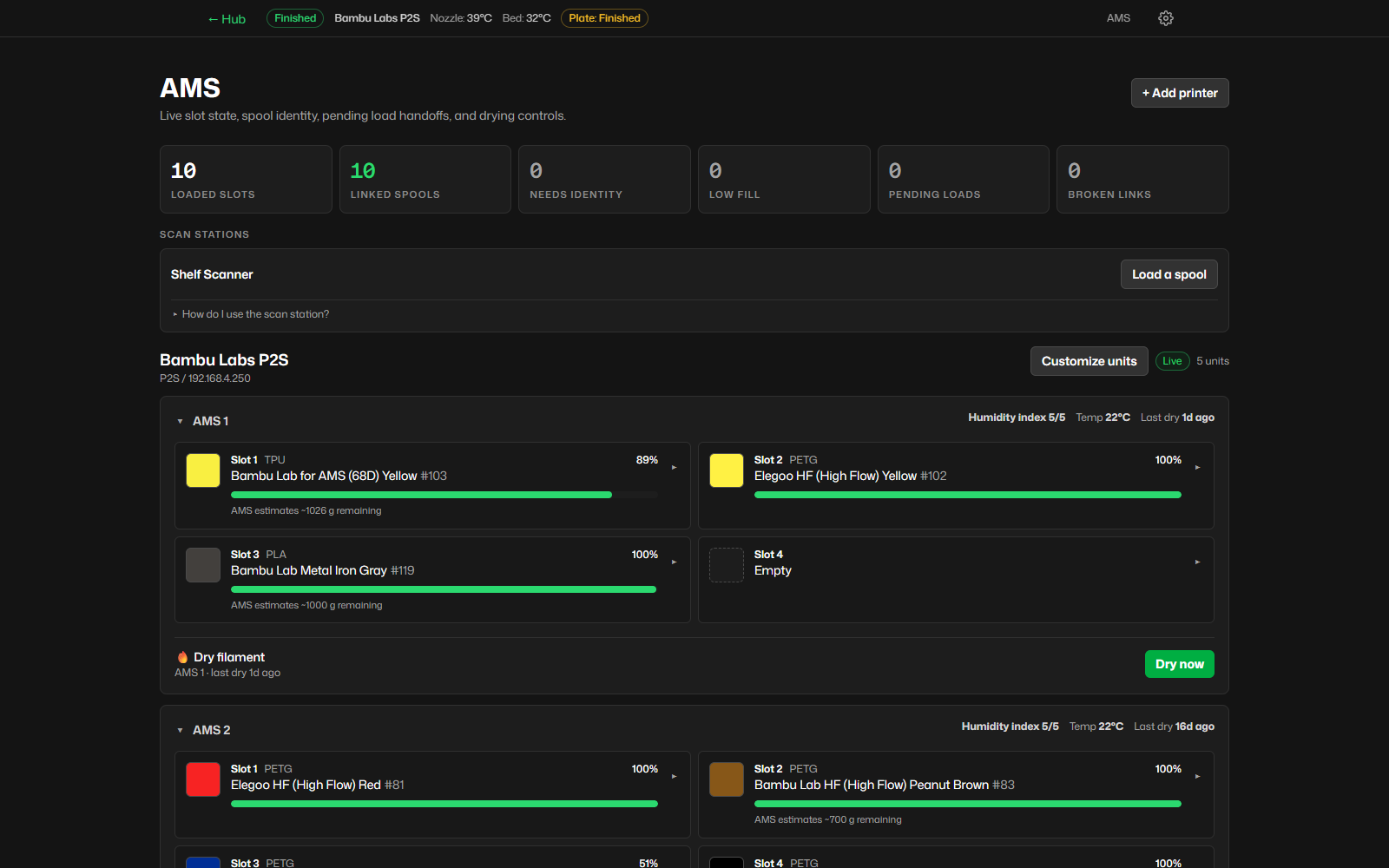
Operate: bring inventory and live printer state into the workflow.
-
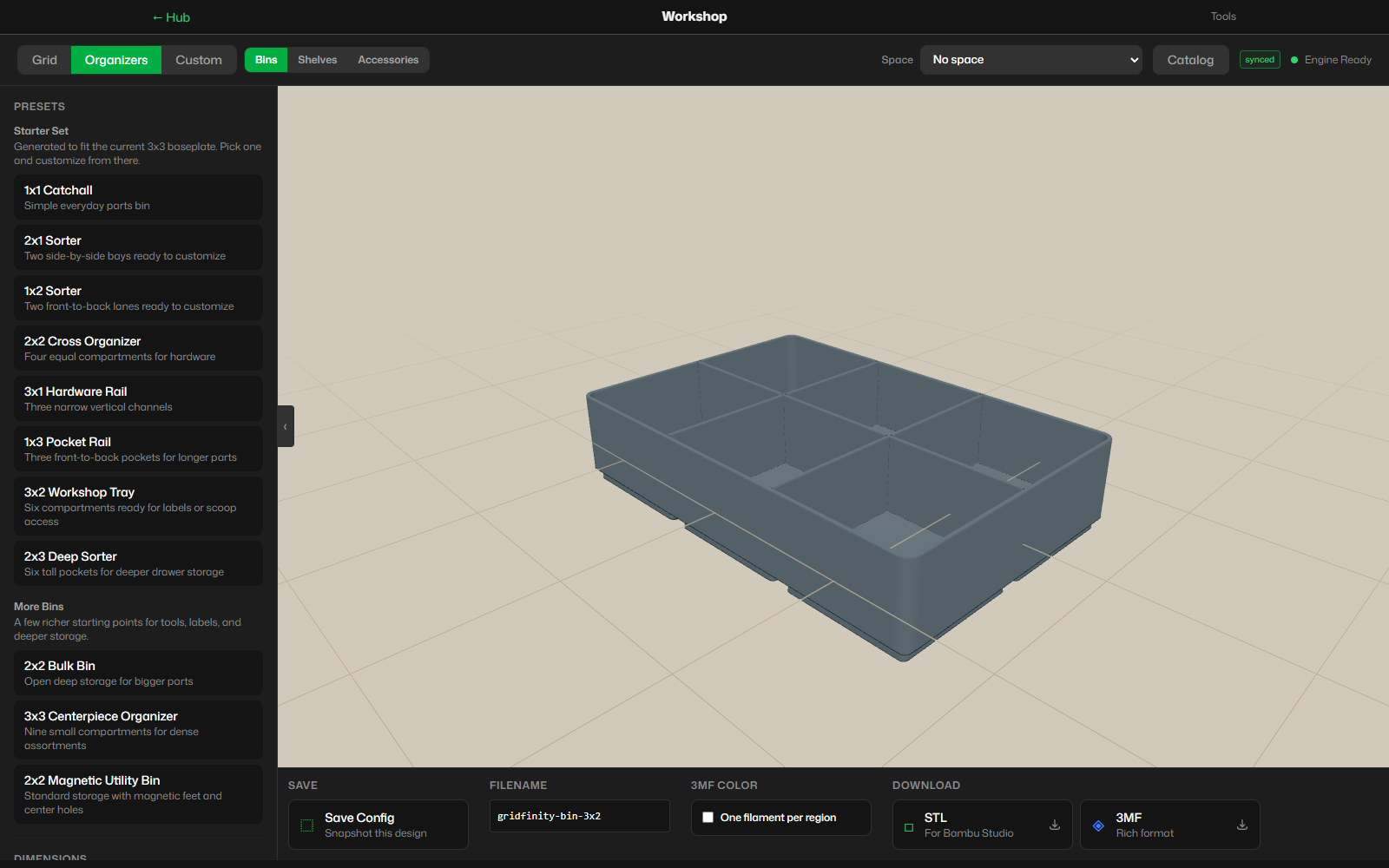
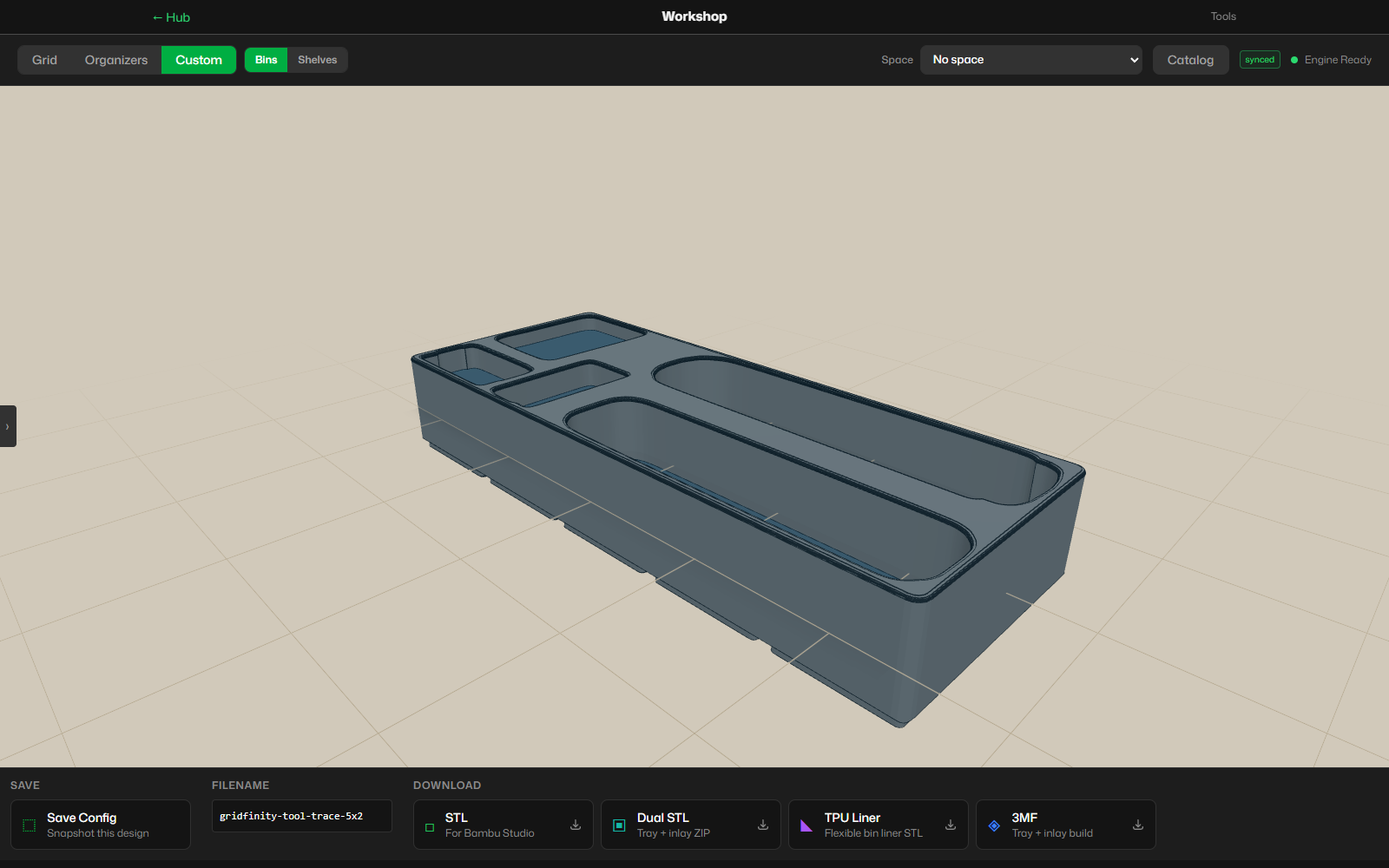
Organize: generate fitted storage with configurable geometry and exportable models.
Product judgment
Physical systems need explicit boundaries.
A connected product has to account for permissions, state changes, and failure across software and hardware. I treated integration boundaries, observable decisions, and points for human intervention as part of the product design.
I directed AI agents across product research, interaction design, software, firmware, computer vision, and validation. I set the shared direction and reconciled the work across those disciplines.
What this demonstrates
A working product spanning interface design, data flows, hardware integration, and generated geometry. Its breadth comes from following a real workflow across the boundaries between tools.
Tools and systems: React, TypeScript, Python, MQTT, ESP32-S3, NFC, and computer vision.