Back to selected work
Adaptive Piano Learning App
Practice that responds to the learner.
A connected learning product that turns goals, available time, and recent performance into more focused piano practice.
The problem
Practice needs a useful next step.
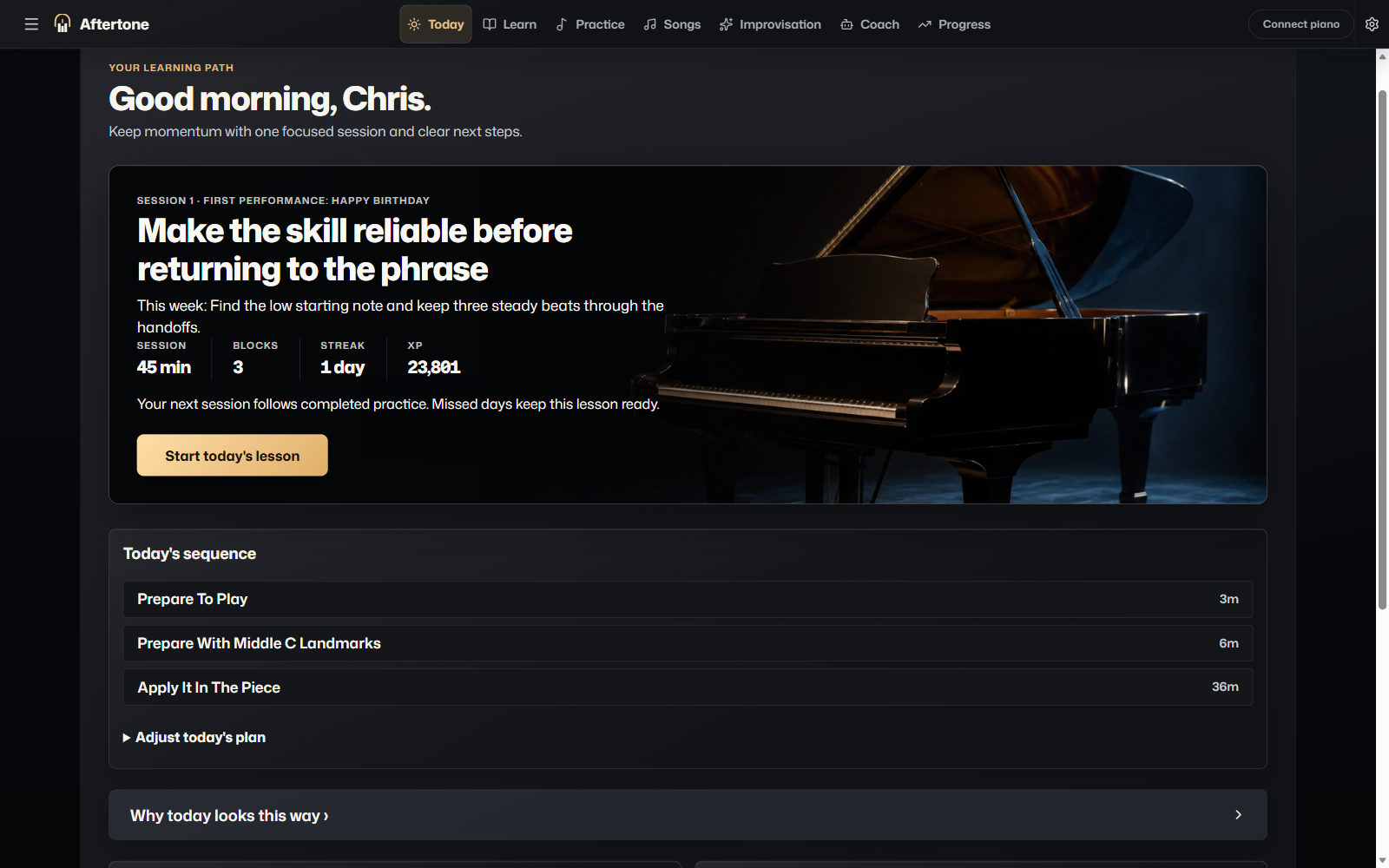
An adult learner's goals, time, and recent performance vary. A practice plan should respond to those differences and connect individual exercises to a broader learning path.
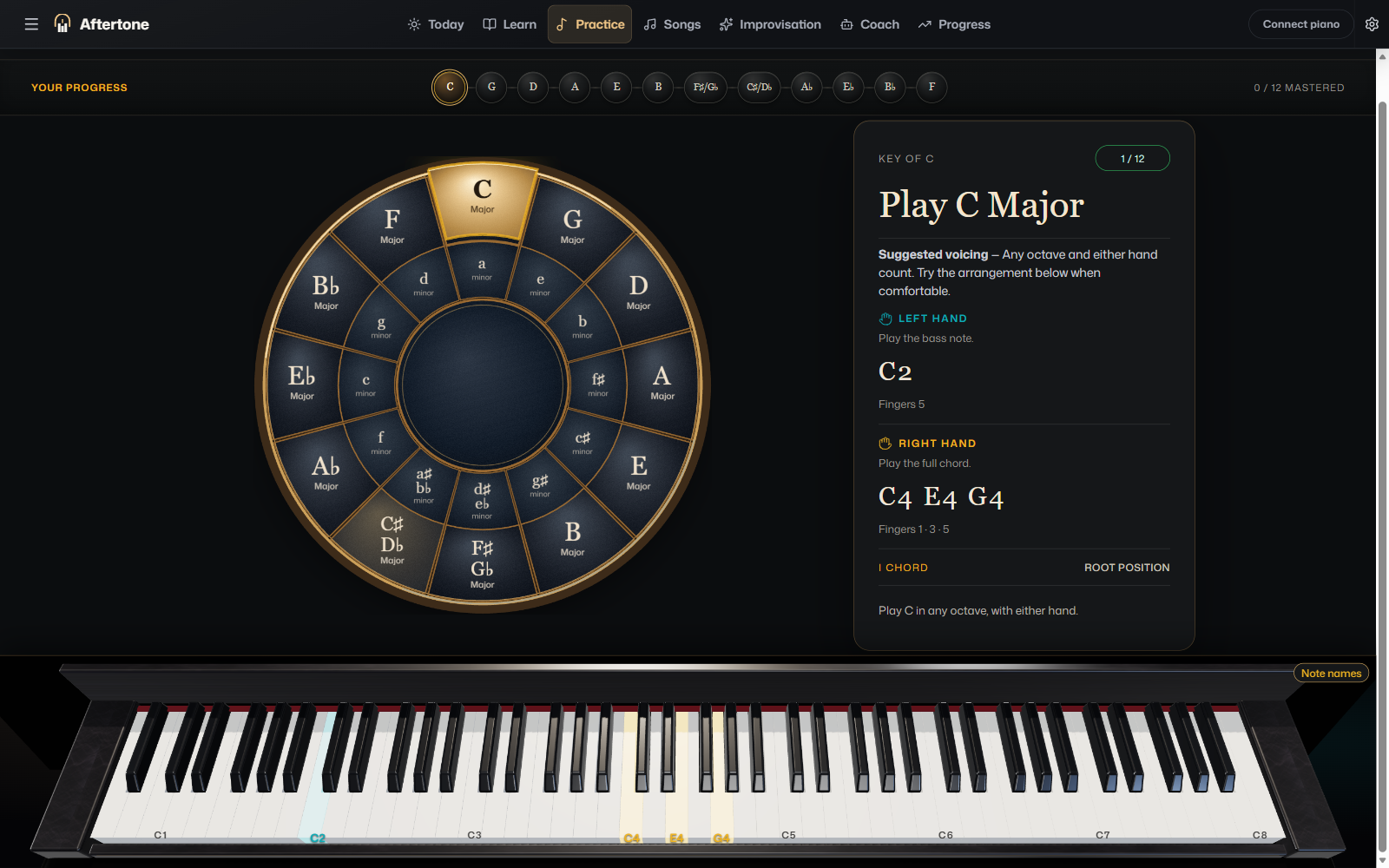
I set out to bring guided practice, chords, scales, technique, playing along with music, and progress tracking into one experience, with feedback that helps the learner decide what to work on next.
What I built
One connected learning loop.
I defined the learning model, product principles, roadmap, architecture, and release sequence, then directed implementation and iteration across the web and iOS experience.
-
Plan: use learner goals and constraints to shape practice.
-
Practice: connect exercises and instruction with MIDI input.
-
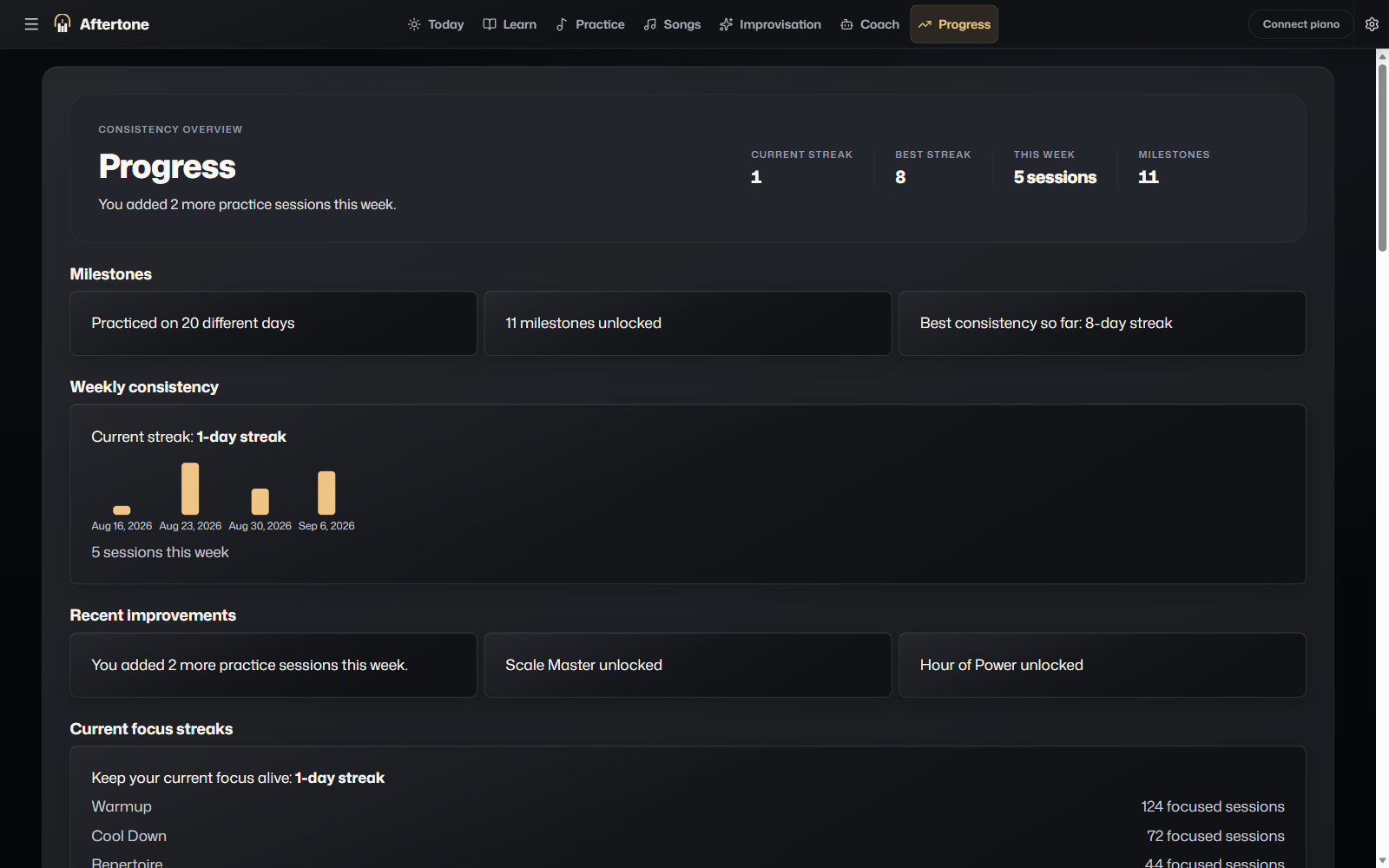
Reflect: make performance feedback and progress useful inputs to the next session.
Product judgment
Adapt the path. Keep the learner in charge.
The learner establishes goals and constraints; the system adapts practice and feedback around them. Explainable recommendations make that relationship visible.
I coordinated specialized AI agents across research, design, engineering, testing, and review, while retaining responsibility for product direction, tradeoffs, and release acceptance.
Useful autonomy depends on clear goals, observable progress, and meaningful user control.
What this demonstrates
A product taken from paper specification through implementation and deployment, with a connected learning experience and ongoing iteration.
Tools and systems: React, TypeScript, Python, MIDI, iOS, and coordinated development with AI.